

There’s nothing quite like the warm, rich aroma of chocolate bread pudding baking in the oven—it’s the edible equivalent of a fuzzy blanket and a favorite childhood movie. This timeless staple has satisfied sweet cravings for centuries, requiring minimal fancy equipment and only a handful of staple pantry ingredients. Whether you’re using up leftover holiday brioche, prepping a potluck dessert, or just craving a cozy late-night treat, this recipe delivers that perfect balance of creamy custard, soft soaked bread, and deep, satisfying chocolate flavor every time. In this guide, we’ll break down the science behind the perfect texture, share pro tips to avoid common mistakes, and cover variations to suit every taste and dietary need. For more tested comfort food recipes, from quick weeknight meals to decadent desserts, explore our full cooking blog for hundreds of crowd-pleasing ideas.
 Slice of freshly baked chocolate bread pudding, served warm to highlight its gooey, custardy interior
Credit: food52.com
Slice of freshly baked chocolate bread pudding, served warm to highlight its gooey, custardy interior
Credit: food52.com
History and Legacy of This Timeless Comfort Dessert
Bread pudding as a concept dates back to 17th century Europe, when frugal home cooks created the dish as a way to avoid wasting stale bread, eggs, and milk—basic, inexpensive staples available to most households. Early versions were often savory, served as a main course with meat broth, until sugar and cocoa became widely accessible in the 1800s, when home cooks began adding chocolate to turn the humble dish into a sweet, indulgent dessert. By the mid-20th century, old fashioned chocolate bread pudding was a staple of American church potlucks, family Sunday dinners, and school cafeteria menus, prized for its low cost, ease of scaling, and ability to feed a crowd with minimal effort. Unlike flashy modern desserts, it relies on simple, high-quality ingredients and slow, gentle baking to deliver that signature nostalgic comfort that makes it feel like a warm hug in a bowl.
Core Ingredients for Authentic, Moist Chocolate Bread Pudding
The difference between a gummy, bland pudding and a rich, custardy, crowd-pleasing one comes down to ingredient quality and ratio. We’ll break down exactly what to look for to get perfect results every time.
The Best Bread for Structure and Texture
Bread is the foundation of this dessert, so its texture and moisture content will make or break your final result. The ideal choice is a dense, slightly sweet bread with a sturdy crumb that can absorb the custard without turning to mush: top picks are brioche, challah, French bread, or Italian bread. Brioche and challah are particularly excellent because their high butter and egg content add extra richness to the custard, while their tight crumb holds up to soaking without falling apart. A common mistake is using fresh, soft sandwich bread: its high moisture content leads to a soggy, dense pudding with no structural integrity. If you only have fresh bread on hand, cube it into 1-inch pieces and toast in a 300°F (150°C) oven for 10-15 minutes to dry out the crumb before using. Day-old or slightly stale bread is non-negotiable for the best texture—its drier crumb soaks up custard evenly, resulting in a light, creamy interior with just a hint of chew. If you’re serving this pudding as part of a casual family dinner, pair it with these savory weeknight sliders for a savory balance to the rich dessert.
| Bread Type | Flavor Profile | Best For |
|---|---|---|
| Brioche | Buttery, lightly sweet | Rich, decadent puddings, holiday servings |
| Challah | Mildly sweet, soft crumb | Balanced, crowd-pleasing puddings |
| French bread | Neutral, chewy crust | Savory-sweet variations, lower-sugar puddings |
| Italian bread | Dense, neutral crumb | Gluten-free friendly sturdy options |
Chocolate Selection for Deep, Balanced Flavor
The chocolate you choose will define the overall flavor profile of your pudding, so it’s worth investing in high-quality options for the best results. For a deep, complex, not-too-sweet flavor, opt for 60-70% dark chocolate, either in bar form or high-quality chips. Dutch-processed cocoa powder is ideal for custards, as it has been alkalized to reduce acidity, resulting in a milder, deeper chocolate flavor and a richer dark color. If you prefer a brighter, more tangy chocolate flavor, natural cocoa powder works well, but you may need to add a touch more sugar to balance its acidity. Avoid cheap chocolate chips with added stabilizers and wax, as they won’t melt smoothly into the custard and can leave a grainy texture. If you’re making a kid-friendly version, semi-sweet or milk chocolate works, but reduce the added sugar in the custard by ¼ cup to avoid overwhelming sweetness. If you love rich, fudgy no-bake chocolate desserts, our fudgy no-bake favorite is another crowd-pleaser with a similar deep cocoa profile.
Custard Base for Creamy, Not Gummy, Results
The custard is what transforms soaked bread into a cohesive, creamy dessert, and its ratio and preparation are critical to success. For a standard 9×13 inch baking dish, use 4 large room-temperature eggs, 1 cup granulated sugar, 2 cups whole milk, 1 cup heavy cream, 2 teaspoons pure vanilla extract, and ¼ teaspoon fine sea salt. Whole milk and heavy cream in a 2:1 ratio gives enough richness without making the custard so heavy it weighs down the bread. A key pro tip: always temper your eggs before adding the warm milk mixture to avoid curdling. To do this, whisk the eggs and sugar until just combined, then slowly pour ½ cup of the warm milk and cream mixture into the eggs while whisking constantly, then pour the egg mixture back into the pot of warm milk and whisk to combine. Over-whisking the custard will add unwanted air bubbles that lead to a spongy, uneven texture, so mix just until all ingredients are fully incorporated.
Step-by-Step Baking Guide for Perfect Results Every Time
Follow these precise steps to avoid common pitfalls and get a perfectly set, custardy pudding every time.
Prep the Bread and Chocolate
Start by cubing your bread into uniform 1-inch pieces—uniform size ensures even soaking and baking. If using bar chocolate, chop it into small, even chunks, or use high-quality chocolate chips. Toss the chocolate with 1 tablespoon of the prepared custard before adding it to the bread; this prevents the chocolate from sinking to the bottom of the dish during baking.
Make the Tempered Custard
In a large mixing bowl, whisk the eggs and sugar just until combined, taking care not to overbeat. In a small saucepan, heat the whole milk and heavy cream over medium heat until just steaming (do not boil, as boiling will curdle the eggs). Slowly pour ½ cup of the warm milk mixture into the egg mixture while whisking constantly, then pour the egg mixture back into the saucepan and whisk until fully combined. Remove from heat, stir in the vanilla extract and salt, and set aside to cool slightly for 5 minutes.
Soak and Assemble the Pudding
Place the bread cubes and chocolate in a large mixing bowl, then pour the warm custard over top. Gently stir to coat every piece of bread, then press down firmly with a spatula to ensure all bread is fully submerged in the custard. Let the mixture soak at room temperature for 20-30 minutes—skimping on this time will lead to under-soaked bread and a dry, uneven pudding.
Bake to Perfection
Preheat your oven to 350°F (175°C), and grease a 9×13 inch ceramic or glass baking dish with butter or non-stick spray. Pour the soaked bread and custard mixture into the dish, smoothing the top with a spatula. Bake for 45-50 minutes, until the edges are puffed and golden, and the center jiggles slightly when you nudge the dish (it should not be liquid or runny). For extra food safety, the custard should reach an internal temperature of 160°F (71°C), per USDA safe food handling guidelines for egg dishes, to ensure any harmful bacteria are destroyed. If you want a crispy, caramelized top, switch the oven to broil for 2-3 minutes, watching closely to avoid burning. Let the pudding rest for 15 minutes before serving to allow the custard to set fully, so it doesn’t run all over the plate when sliced. For even heat distribution, use a heavy-duty ceramic or glass baking dish, just like when you’re using cast iron cooking tips for consistent, restaurant-quality results.
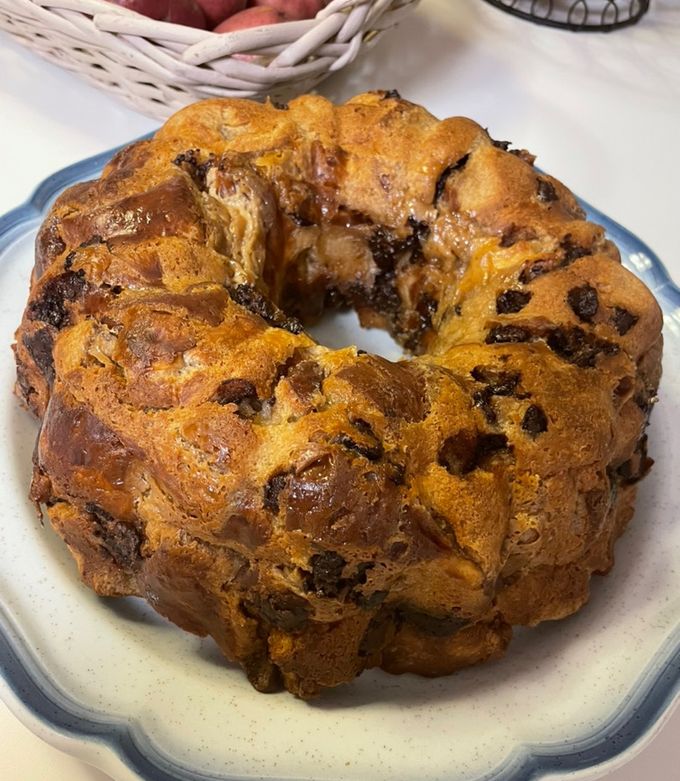
 Fresh out of the oven, the pudding has a golden, slightly crispy top and a soft, custardy interior
Credit: food52.com
Fresh out of the oven, the pudding has a golden, slightly crispy top and a soft, custardy interior
Credit: food52.com
Serving Suggestions and Pairings
Old fashioned chocolate bread pudding is best served warm, straight out of the oven or reheated gently, to highlight its gooey, custardy texture. Toppings and beverage pairings can elevate the dessert from simple to showstopping with minimal effort.
Ideal Toppings and Sauces
- Homemade whipped cream: Whip 1 cup of heavy cream with 2 tablespoons of powdered sugar and 1 teaspoon of vanilla extract until soft peaks form, for a lighter, fresher alternative to store-bought whipped cream.
- Salted caramel sauce: The subtle salt cuts through the richness of the chocolate and adds a buttery, toasty depth.
- Toasted marshmallows: Broil mini marshmallows on top of the warm pudding for a s'mores-inspired twist.
- Fresh berries: Sliced strawberries, raspberries, or blackberries add a bright, tangy contrast to the rich chocolate.
- Flaky sea salt: A light sprinkle of Maldon or similar flaky salt enhances the chocolate flavor without adding sweetness.
- Chocolate sauce or ganache: Drizzle warm dark chocolate ganache over the top for extra cocoa intensity.
Beverage Pairings
- Hot medium-roast coffee: The subtle bitterness of the coffee balances the pudding’s sweetness without clashing with the chocolate flavor.
- Cold whole milk: The classic pairing, the cool milk cuts through the rich custard for a refreshing contrast.
- Spiced chai: The warm cinnamon, cardamom, and ginger notes complement the cozy, spiced profile of the dessert.
- Ruby port: For an adult-only pairing, the fruity, robust notes of port pair beautifully with dark chocolate.
- Espresso or affogato: A shot of espresso poured over a scoop of vanilla ice cream on top of the pudding makes for a decadent, coffee-infused treat.
For a full holiday dessert spread, pair this warm pudding with our cozy holiday side for a mix of cozy, autumnal flavors that pair perfectly with chocolate.
 Individual serving topped with chocolate sauce and a sprinkle of flaky sea salt for extra depth of flavor
Credit: cookpad.com
Individual serving topped with chocolate sauce and a sprinkle of flaky sea salt for extra depth of flavor
Credit: cookpad.com
Storage and Reheating Best Practices
Proper storage and reheating will keep your chocolate bread pudding tasting fresh for days, without sacrificing its creamy texture.
Proper Storage Methods
Let the pudding cool completely to room temperature before covering, to avoid condensation that will make the top soggy. Cover tightly with plastic wrap or aluminum foil, and store in an airtight container in the refrigerator for up to 4 days. For longer storage, wrap individual portions tightly in plastic wrap, then place in a freezer-safe zip-top bag, and freeze for up to 1 month. Be sure to label the container with the date to track freshness.
Best Practices for Reheating
The oven is the best method for reheating, as it preserves the pudding’s texture without drying it out: preheat to 325°F (160°C), cover the dish with aluminum foil to lock in moisture, and heat for 15-20 minutes until warmed through. For single portions, the microwave works in a pinch: heat on 50% power in 30-second intervals, stirring gently between each, to avoid rubbery edges or curdled custard. Never reheat on high power, as this will overcook the eggs and make the texture grainy. Thaw frozen portions overnight in the refrigerator before reheating for best results.
Creative Variations to Suit Every Taste
While the classic old fashioned chocolate bread pudding is perfect as-is, small tweaks can make it fit any occasion or dietary need.
Spiced Holiday Version
Add 1 teaspoon of ground cinnamon, ½ teaspoon of ground nutmeg, and ¼ teaspoon of ground cloves to the custard mixture, along with ½ cup of dried cranberries or raisins for a festive, autumnal twist that’s perfect for Thanksgiving or Christmas.
Savory-Sweet Adult Twist
Add 2 tablespoons of bourbon, dark rum, or espresso powder to the custard before soaking the bread. For a subtle kick, add a pinch of cayenne pepper—the warm heat enhances the chocolate flavor without making the dessert spicy.
Vegan and Gluten-Free Adaptations
To make a vegan version, swap regular milk for a mix of oat and coconut milk, use flax eggs (1 tablespoon ground flaxseed mixed with 3 tablespoons of water per egg) instead of regular eggs, vegan dark chocolate, and a sturdy vegan brioche or gluten-free bread. Bake as directed, and note that vegan puddings may take 5-10 minutes longer to set. If you’re adapting recipes for dietary restrictions, our substitution guide for common ingredients has tips for swapping dairy and eggs in baked goods without sacrificing texture.
Frequently Asked Questions
Why is my chocolate bread pudding gummy in the middle?
This is almost always caused by using fresh, soft bread or skimping on soak time. Always use day-old, dense bread, and let the mixture soak for at least 20 minutes at room temperature before baking. Overmixing the custard can also add air bubbles that create a spongy, uneven texture, so mix just until ingredients are combined.
Can I make chocolate bread pudding ahead of time?
Yes! Assemble the pudding up to 24 hours in advance, cover tightly, and store in the refrigerator. If baking cold from the fridge, add 5-10 minutes to the total baking time to ensure the center sets fully.
What’s the difference between chocolate bread pudding and chocolate bread soufflé?
Bread pudding has a dense, moist, custardy texture from soaked bread baked in a dish, while a soufflé is light, airy, and risen from whipped egg whites, with no bread base. Soufflés are also more delicate and must be served immediately after baking, while bread pudding holds well for hours.
Can I use white chocolate instead of dark or milk chocolate?
Yes, but white chocolate has no cocoa solids, so it is significantly sweeter and creamier than dark or milk chocolate. Reduce the added sugar in your custard by ¼ cup to avoid overwhelming sweetness, and add 1 tablespoon of cocoa powder if you want a subtle chocolate flavor to balance the white chocolate’s richness.
Is chocolate bread pudding gluten-free?
Yes, swap regular bread for a sturdy certified gluten-free brioche or gluten-free sandwich bread, and ensure all other ingredients (chocolate, vanilla, etc.) are certified gluten-free to avoid cross-contamination. The recipe otherwise stays exactly the same.
Conclusion
Old fashioned chocolate bread pudding is the rare dessert that feels both indulgent and humble, requiring minimal effort to deliver maximum comfort. Its warm, rich flavor and nostalgic charm make it a guaranteed hit for everything from casual weeknight desserts to holiday feasts, and it’s easy to tweak to match your taste preferences or dietary needs. Ready to bake your own batch? Grab a loaf of day-old brioche, your favorite dark chocolate, and get started—your kitchen will smell incredible in under an hour. For more tested, approachable recipes for every occasion, browse our full collection of sweet and savory dishes on our full cooking blog — we’ve got something for every craving.

Hi, I’m Daniel Brooks—a food lover and kitchen gear enthusiast. I enjoy testing cookware, utensils, and gadgets to see what really works in everyday cooking. At seashell-kudu-262783.hostingersite.com, I share honest reviews, comparisons, and simple guides to help you choose the best tools for a safer, smarter, and more enjoyable kitchen.
Related posts:
 How to Make a Fruit Basket for a Gift: Easy DIY Guide
 Do You Need a Basket? Essential Guide for Air Fryers
 How to Adjust Syrup Dispenser Pressure: Expert Tips
 Kitchen Cabinets With Black Appliances: Trendy Design Tips
 White Kitchen And Stainless Steel Appliances: A Perfect Duo
 Kitchen Colors With White Cabinets And White Appliances: Vibrant Ideas

